Category: Books, Movies, TV & Web


Fair Play


Thinking about Oliver Stone’s masterful Wall Street (1987), it seems to me there were probably disparate audiences for his drama. Some viewers admired Gordon Gekko (“Greed is good!”), and others were horrified by the fate of poor Bud Fox, who wound up going to prison.

Fair Play, a drama set in the world of finance, targets the same two demos: people who salivate at the chauffeured limos and fancy meals available to Wall Street hotshots, and those who recoil from the human tradeoffs required to make it big in that profession. 

Fair Play doesn’t shy away from those moral questions, but it adds a new wrinkle: gender politics. When analyst Emily gets a big promotion that her lover/coworker thought was his, their relationship is put to the test. To put it mildly. Should Emily “stand by her man,” or should she subscribe to the feminist mantra, “you can (and should) have it all, baby”?  Release: 2023  Grade: B


Would I watch it again?  Probably not. The movie is well made and provocative, but its unlikable leads and downer resolution make it a once-is-enough-for-me, thank you.


**


Up the Down Staircase


Within a month of each other in 1967, two high-school-themed movies opened in theaters. The films were To Sir, With Love, and Up the Down Staircase. Chances are, you recall the movie with a big star (Sidney Poitier) and a titular song that topped the charts. The other movie might or might not be familiar.

I prefer Up the Down Staircase, starring Sandy Dennis as a teacher at an inner-city school who must choose between a job at a cushy, wealthy school, or the unceasing challenges of life at Calvin Coolidge High School.

Sir and Staircase both tug at the heartstrings, and they deal with similar themes. But to me the latter film is more realistic, and far less sappy. Release: 1967  Grade: A-


Would I watch it again?  I just did.


**


The Goldsmith


What I loved about 1974’s The Texas Chain Saw Massacre was its tone of demented glee. When young people encountered a crazed family in Texas, we didn’t need (or want) “backstory” explaining the lunatics’ twisted history. We already know there are crazies in the world. Just bring on the madness, please. Chain Saw did just that.

The Goldsmith, another young-people-versus-loonies story, bores us with action-halting exposition in which we learn why the baddies are so bad. Also, it doesn’t help that the protagonists, a trio of thieves out to rob an elderly couple, are so unpleasant. When the movie degenerates into all-out body horror, I didn’t care what happened to anyone.

Goldsmith, from Italy, is a lot like its American cousin, Don’t Breathe. In both movies, what begins as a suspenseful break-in story morphs into something else entirely — but not in a good way.  Release: 2022  Grade: C-


Would I watch it again?  No.


© 2010-2025 grouchyeditor.com (text only)

Share

by Bel Kaufman


It isn’t often that I actively look forward to returning to a book I’m reading. Don’t get me wrong; I love books, but these days there are so many options competing for my leisure-time attention. Options like Netflix, music, regular TV, the Internet ….

But I went out of my way to read Up the Down Staircase, which, nearly 60 years after its publication, is still a joy.

Kaufman’s 1964 novel, chronicling four months of a rookie teacher’s life at a New York City high school, introduced a groundbreaking format. It’s largely a collection of fictional inter-office memos, student homework assignments, personal letters, and items from the class “suggestion box.” This collage of written memorabilia — loaded with rib-tickling malaprops from both kids and adults — paints an indelible picture of English teacher Sylvia Barrett’s introduction to Calvin Coolidge High School.

But the story is in no way all fun and games. Kaufman deftly juxtaposes humor with all the heartbreak and frustrations faced by idealistic teachers and underprivileged kids at the school.

A confession: Staircase is a font of deep nostalgia for Yours Truly. Back in the day, I was cast as one of Sylvia’s students in our high school’s stage production of the book.

I played, naturally, class comedian “Lou Martin.”

Ha ha!


© 2010-2025 grouchyeditor.com (text only)

Share

by Oscar Wilde


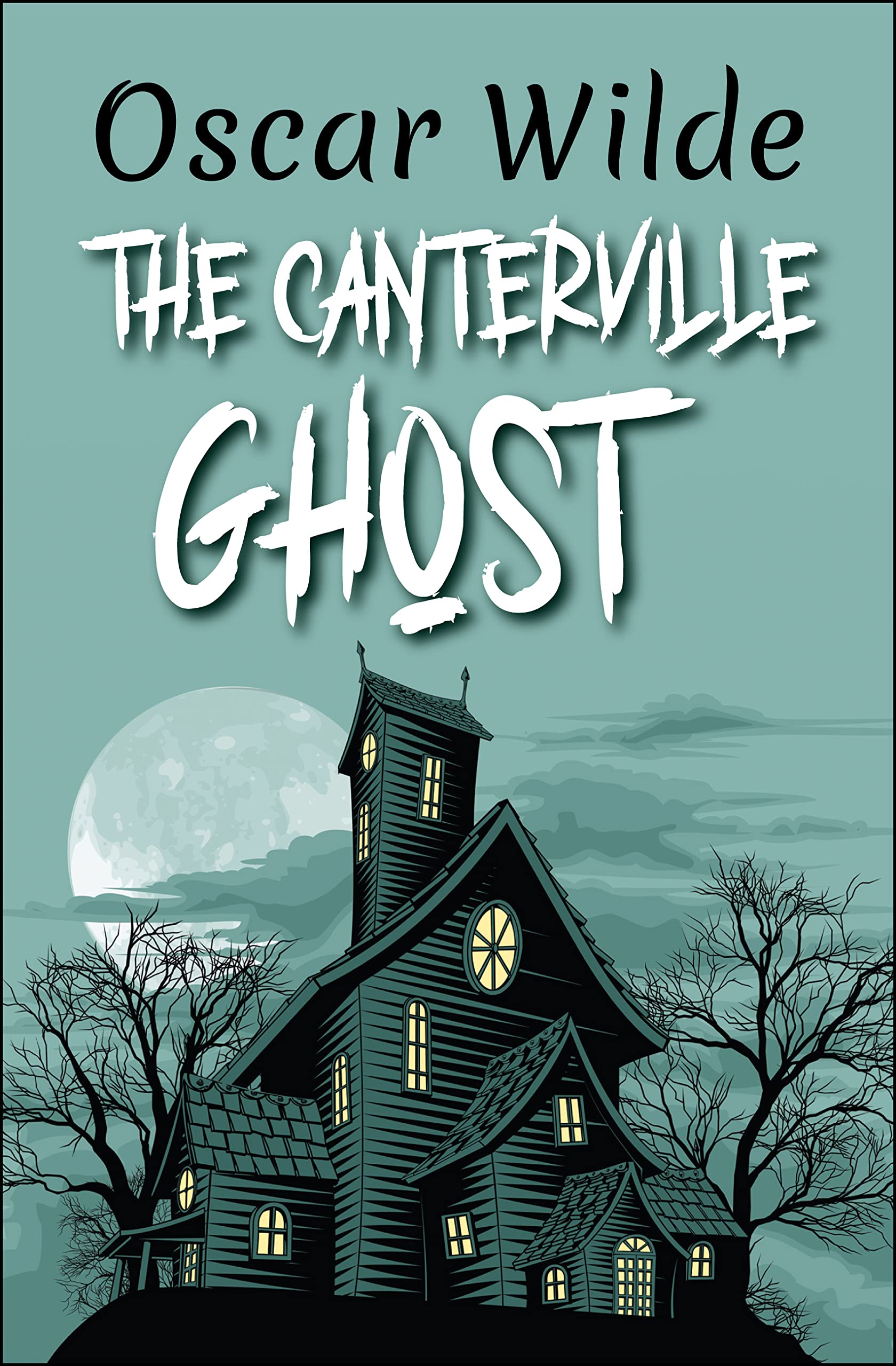
Oscar Wilde’s first published story, The Canterville Ghost, tells the tale of an American family that, upon purchasing an ancient English estate, learns that the house also comes with a nettlesome ghost.

Much to its dismay and despite its best efforts, the ghost more than meets its match in the Otis family.  This is especially true of a pair of mischievous twin boys.

Unlike Wilde’s novel The Picture of Dorian Gray and his plays, Canterville seems to be aimed primarily at children. The trademark Wilde wit is on display, but unlike his later works (yet in keeping with the titular spirit) the story doesn’t have much meat on its bones.


© 2010-2025 grouchyeditor.com (text only)

Share


by Frances Hodgson Burnett


Plot:  Ten-year-old orphan Mary moves from India to England, where she discovers the titular garden and some “magical” neighbors who greatly improve her outlook on life.

I’m not exactly in the target demo for this book, which is presumably children. But it’s easy to see why Burnett’s 1911 novel is considered a classic, with its vivid depiction of sour-faced Mary and the life lessons — the power of positive thinking; the healing effects of nature — that she and another child absorb at a mysterious mansion in Yorkshire.

Pros:  The fun is in witnessing the gradual transformations of grumpy Mary and an even haughtier boy from spoiled brats to good kids. The Yorkshire dialect is quite amusing, as are the cantankerous dispositions of certain locals.

Cons:  I could do with less of Burnett’s horticultural infatuation, which reminded me of the endless descriptions of masts and decks penned by Herman Melville in Moby Dick (of all books). I get that some authors love to wax rhapsodic about chrysanthemums and poppies and vines but … good grief, enough is enough.


© 2010-2025 grouchyeditor.com (text only)

Share


You Won’t Be Alone


“It may strike some as too artsy for its own good.” — from the critics’ consensus about You Won’t Be Alone on Rotten Tomatoes.

Yeah, that might be an understatement.

Actually, the film isn’t so much “too artsy” as it is bleak and slow-moving. The plot involves a peasant girl who, after a fateful encounter with a witch, becomes a sometimes-murderous shapeshifter seeking love and the meaning of life in 19th-century Macedonia.

Individual scenes are mesmerizing, many images are indelible — the photography and score are beautiful. But oh, man, is this movie slow going. Meaningful or meaningless, life is simply too short. Release: 2022  Grade: B-


**


Brightwood


Groundhog Day meets The Twilight Zone when a bickering couple goes for a scenic jog that never ends in this low-budget indie.

I love a good premise, but when said premise is nothing new, repeated ad nauseam, and leads to an ambiguous denouement that reeks of a screenwriter’s “I can’t think of a good way to end this, so I’ll just have them do something gross” … well, no thanks. Release: 2022  Grade: D


**


Happy Death Day 2U


Like its predecessor, 2017’s Happy Death Day, this sequel is a mash-up of Groundhog Day, Back to the Future, and Scream. Also, as in the original, the plot is a convoluted mess involving time loops, multiverses, and the “butterfly effect.” And if you’re looking for actual scares, best look elsewhere.

None of that matters. What matters is that it’s all consistently amusing, the characters are likable, and good lord — move over, Jennifer Lawrence. To my mind, Jessica Rothe is the best comic actress working in movies.

And did I mention that the story is also shockingly poignant? Release: 2019  Grade: B+


**


Barbarian


The first half of Barbarian promises to live up to its lofty 93 percent “fresh” rating on the review aggregator Rotten Tomatoes. The movie is compelling, believable and, above all, suspenseful.

Georgina Campbell plays a young woman who, upon arriving in Detroit for a job interview, learns she must share a rental house with a man played by Bill Skarsgard. Can the handsome stranger be trusted? Are the two of them alone in the small house?

Alas and alack, the second half of the film, in which the story switches gears, is all too familiar to fans of horror flicks: It’s increasingly ridiculous, with our heroine making bone-headed decisions and the plot veering into genre cliches.

If you are a horror-film-lover, as I am, you understand that these days you can’t have nice things — just half of nice things. Release: 2022  Grade: B


© 2010-2025 grouchyeditor.com (text only)

Share


Snatchers


A teen girl has unprotected sex, gets pregnant, and gives birth — all within 24 hours.

Despite my rather grim synopsis above, 2019’s Snatchers is actually a madcap mash-up of movies like Mean Girls and The Hidden. Or possibly Gremlins.

The plot is ridiculous, and I wouldn’t describe the film as particularly “scary,” but the direction is fast-paced, and the girls and their Gen Z jargon are consistently amusing. As pleasant timewasters go, you could do a lot worse than this horror-comedy.   Release: 2019  Grade: B


© 2010-2025 grouchyeditor.com (text only)

Share

by Merryn Allingham


The Bookshop Murder finds amateur sleuth Flora Steele investigating a mysterious death in 1950s Sussex. She also finds romance with a reclusive, handsome writer in their picturesque small town.

This is the kind of book that doesn’t just employ cliches — thematically and literally — but seems to embrace them. The best word to describe the tone is mild. It is mildly intriguing, mildly dramatic. It’s basically Nancy Drew for adults who never outgrew Nancy Drew.

When I was a kid, I was a big fan of the Hardy Boys. But as an adult, I prefer a bit less innocence (or “coziness”) — and heaps more spice.


© 2010-2025 grouchyeditor.com (text only)

Share


The Coffee Table


I was trying to recall which movie Spain’s The Coffee Table reminded me of, and then it came to me: Alfred Hitchcock’s Rope. That’s a compliment. A big compliment.

Both films revolve around an unexpected death and, since we learn early on who is responsible, you wouldn’t call their plots “whodunits.” They are suspense dramas. The audience is kept on edge wondering if, when, and how the culprit might be caught.

Estefania de los Santos and David Pareja play first-time parents (both well into middle-age) who argue about, and then purchase, an unusual coffee table. Problem is: the table might be cursed. Shortly after they install the piece of furniture into their living room, bad things happen.

The Coffee Table is all about dramatic tension, and that’s where it almost, but not quite, reaches Hitchcockian levels.

If I must quibble — and I must because that’s what I do — I’d say the only part of the movie that falters is the final plot revelation, which doesn’t quite ring true. Release: 2022  Grade: B+


Note:  A number of reviews describe The Coffee Table as a “black comedy.” Uh, no. With subject matter about as dark and disturbing as it comes, there is precious little humor in the film.


**


Divertimento


I can’t fault the director of Divertimento for lack of ambition. His 30-minute short film is well-produced and feels like James Bond in an episode of The Twilight Zone. But ambition can only take you so far.

The Plot:  A handsome, tuxedoed man and a pretty lady return to the scene of a prank which went horribly wrong. This location is a gorgeous chateau in France where other handsome men and pretty ladies engage in high-stakes chess games … and a much deadlier game.

The Problems:  Everyone in the cast is oh-so-earnest, which is unfortunate when they are subjected to cringeworthy dialogue, sloppy edits, and flashbacks that confuse more than they illuminate. The plot is clearly going for an everything-is-not-as-it-seems vibe, a la The Sixth Sense. Alas, the result is a pretty but incomprehensible mess. Release: 2020  Grade: D


© 2010-2025 grouchyeditor.com (text only)
Share


Inside


Willem Dafoe plays an art thief who, when things go wrong, becomes trapped in a high-tech, high-rise apartment in Manhattan.

Dafoe is always an interesting actor, with an interesting face and an interesting voice. But spending two hours watching his character struggle to survive entrapment in a fancy penthouse isn’t the same as, say, two hours spent watching Tom Hanks marooned on an island in the Pacific. The former simply isn’t sustainable. Release: 2023 Grade: B-


**


65


If you read the reviews of 65 on Rotten Tomatoes, you’ll notice that critics who give “thumbs up” to this science-fiction thriller feel the need to apologize for doing so. They imply: It’s not enough for a movie to simply set out to entertain its audience. Where is the Important Message?

65, in which space travelers Adam Driver and a tween girl get stranded on Earth — 65 million years ago — starts out silly and gets sillier as it progresses. But it has two likeable leads and never fails to entertain — more so than many overhyped, budget-bloated, three-hour blockbusters. Release: 2023 Grade: B


© 2010-2025 grouchyeditor.com (text only)

Share


by Anthony Gilbert


If you’ve never heard of Anthony Gilbert, don’t feel bad; neither had I. Gilbert was just one of scores of writers contributing to the “golden age of detective fiction” a century ago. I am of course familiar with Agatha Christie and Dorothy L. Sayers and Mary Roberts Rinehart and a handful of other members of the murder-mystery movement, but like so many writers of that era, Anthony Gilbert has faded into obscurity.

The Tragedy at Freyne is typical of its genre. A celebrated artist apparently commits suicide at his secluded British estate, and there are murder suspects galore. If you read old mysteries, you can predict most of what follows.

Gilbert’s story does have someone filling the usual protagonist role, a la Poirot or Sherlock Holmes, but he’s not particularly memorable. Where Gilbert shines is in the portrayal of female characters — particularly women with dark secrets.

That shouldn’t be too surprising. “Anthony Gilbert” was, in fact, a pen name used by Lucy Beatrice Malleson, a prolific English writer responsible for more than 60 crime novels.


© 2010-2025 grouchyeditor.com (text only)

Share