Category: Books, Movies, TV & Web

Potter1


I don’t care how old you are, 15 or 50, the beginning of the end of the Harry Potter saga is sad news.  But for me, this magical film franchise really began to fade about five years ago.

The Potter films were a marvel in the beginning.  Director Chris Columbus reached into a hat and produced a pair of movies that captured not only the essence of J.K. Rowling’s novels, but also their appearance.  Think about it.  All of the Potter films – including the five not directed by Columbus – have relied on the ingenious casting, sets, and music introduced in the first film.  Who supervised the construction of Hogwarts?  What genius cast Robbie Coltrane as Hagrid?  With all due respect, it wasn’t David Yates; nor was it Mike Newell or Alfonso Cuaron.  Rowling could not have asked for a better director than Columbus to transfer her vision to film.


Potter2


Beginning with the third film, the series’s tone began to change.  Gradually, almost imperceptibly, the movies lost some of their charm.  As Harry, Ron and Hermione grew older and less innocent, the stories moved away from the wonder of magic and the mind-blowing concept of a school for wizards, and more toward standard teenage melodrama.  It’s impossible to pinpoint exactly when the fantasy began to diminish, but the transition was unmistakable.   If I were handing out Harry Potter grades in the Great Hall, they would go something like this:  First two films – A;  third and fourth films – B+;  fifth and sixth films – B.

Harry Potter and the Half-Blood Prince is a good movie.  The franchise’s expensive production values, veteran actors, and commitment to quality ensure that all Potter films at least look and sound impressive.  It’s the tone, the ambience, that has changed – and not for the better.


Potter3


Rowling’s books somehow managed to avoid this pitfall.  Maybe that’s because in the books we don’t actually hear Harry’s voice mutate from soprano to baritone (as we did in Chamber of Secrets), nor did we actually watch Ron grow so tall.  Or maybe it’s simply a testament to Rowling’s skill as a writer.


Potter4


Here’s hoping that Deathly Hallows, which opens in a few days, can recapture some of that old magic … although I don’t expect that it will.   Harry Potter and the Half-Blood Prince:    Grade:  B-


Potter5     Potter6


Director:  David Yates  Cast:  Daniel Radcliffe, Rupert Grint, Emma Watson, Helena Bonham Carter, Jim Broadbent, Robbie Coltrane, Tom Felton, Michael Gambon, Alan Rickman, Maggie Smith  Release:  2009

 Potter7      Watch Trailers & Clips (click here)


© 2010-2026 grouchyeditor.com (text only)

Share

Anti1 


Let’s take a little trip, shall we?  Let’s go back to the Garden of Eden.  While we’re there, maybe we can answer a few nagging questions.  Was Eve really a villain?  Are women more responsible than men for “original sin”?  And is life a matter of rational thought creating order … or does chaos reign?

Lars von Trier’s thought-provoking Antichrist has been attacked as a misogynistic film, but I didn’t get that impression.  In Trier’s hellish view of our time here on Earth, we are all of us pretty much screwed.  Here is an exchange between a wife (Charlotte Gainsbourg) and her husband (Willem Dafoe):

She:  “If human nature is evil, then that goes as well for the nature of —“

He:  “Of the women.”

She:  “— the nature of all the sisters.”

Critics have seized on Trier’s storyline in which the wife, traumatized over the accidental death of the couple’s only child, gradually becomes an Eve apparently designed by the devil, leading to some graphically violent outbursts against her husband.  But prior to that, I had to wonder who was torturing whom — if your husband, a therapist, deals with his own grief by treating you like a psychological experiment in a Petri dish (“No therapist can know as much about you as I do,” he tells her), might not you snap, as well?  They say there’s nothing worse than losing a child.  After watching Antichrist, it seems there might be one thing worse:  marriage to a jerk who sidesteps his own problems by analyzing your every move and thought.

All of this sounds like dreary stuff, and it is.  There are a few graphic scenes, but nothing that fans of, say, Hostel haven’t seen before.  Trier has turned potentially off-putting material into an engrossing, visually dazzling, study of the nature of, well, nature.        Grade:  A-


Anti2


Director:  Lars von Trier  Cast:  Willem Dafoe, Charlotte Gainsbourg  Release:  2009


Anti3        Anti4 

Anti5    Watch Trailers (click here)


© 2010-2026 grouchyeditor.com (text only)

Share

Stewart


I know what you must be thinking.

You are thinking, “But this film hasn’t been released yet; how can anyone review it, much less give it a 100 percent rating?”  In answer to that, let me just mention two words:  Kristen Stewart.

Although it’s true that I have yet to see the film, I am told that Ms. Stewart gives a powerful performance.  Says one critic of the film, “We can almost forget the weight of Kristen Stewart dragging it down with every hair flip and tug.”

Reading between the lines of that review, it’s clear to me that this critic is referring to Stewart’s unique ability to create heavy, serious drama out of what might have been a lightweight movie.

Back in the third grade, when I was a tyke of nine years, I developed a crush on a girl named Patty Guggenheimer.  Patty was new to our school, and quite unpopular. One day, sitting in Mrs. Spolum’s class, I inadvertently filled my pants.

Most of my classmates noticed the noxious smell and, in their ignorance, began to whisper about poor Patty.  In my shame and cowardice, I allowed this false impression to continue.  Poor Patty, my schoolboy crush, took the blame, and I am heartsick about that to this day.

But I must admit, there was a pre-pubertal excitement in all of this, as I sat there at my wooden desk, my heart filled with pining for Patty and my pants filled with poop.

Over the years, I grew to miss that exciting sensation.  Then one day not long ago, as I watched a Kristen Stewart movie (you guessed it) – it happened again.

I initially became paranoid; was it just me who was thus affected by Kristen Stewart’s performance?  I checked around, conferring with friends here at rottentomatoes.  To my immense relief, I learned that both Hollywood and SB, whose opinions I value, experienced similar, stomach-tingling sensations whenever they viewed a Kristen Stewart performance.

And so, in conclusion, let me make a bold prediction.  Come the spring and Oscar time, the name Kristen Stewart will be announced as Best Actress in a motion picture, that picture being Welcome to the Rileys.  Kristen’s pert, cherry-tipped breasts will no doubt be awarded an honorary Oscar (she plays a stripper).  And when she climbs the stairs to the podium, every man, woman and child in the Hollywood auditorium will fill his or her pants in excitement.

There will not be a dry ass in the house.


Watch Trailers and Clips
 (click here) 
 

(Note: I originally posted this “review” at rottentomatoes.com in October 2010)


© 2010-2026 grouchyeditor.com (text only)

Share

by Gunter Grass

Tin


Over the past 15 years, I’ve read about 460 books, and all of them – fiction and nonfiction, short and long, classic and trendy – had one thing in common:  I began on the first page, and I finished reading on the last page.  Not so with The Tin Drum. I had to put this book aside after reading 52 pages.  I simply could not stand author Gunter Grass’ style.

Last year, a good friend of mine died, and after his death I learned that this 1959 German novel was a favorite of his.  I was aware of the book’s impressive pedigree:  An Oscar-winning film adaptation was released in 1979, Grass was eventually awarded the Nobel Prize and, according to the new translation’s afterword, “It remains the most important work of German literature since the Second World War.”  I was prepared to love the book.

I detested it.  To me, Grass’s prose screams out, “I am a writer – look at me write!”  Drum’s “groundbreaking” style (switching from third-person to first-person, magical realism – god, how I hate magical realism) and its cutesy characters … all of it seems like undisciplined Vonnegut.  It is tedious reading, and self-indulgent writing.  I really wanted to finish The Tin Drum but, like the book’s hero, the minuscule Oskar Matzerath, I’ve learned that life is simply too short.


© 2010-2026 grouchyeditor.com (text only)

Share

Demons7


1988’s Night of the Demons was a true guilty pleasure.  It was a horror flick that never took itself seriously, but made sure to include all of the genre’s required ingredients – boobs, butts, blood, and boos (not necessarily in that order).  The acting sucked, the production values were cheesy, and the script was apparently concocted by Cub Scouts at a late-night campfire … but who cared?

Director Adam Gierasch’s remake gets some of this stuff right.  The story is still silly, the babes are on board, and the demons are suitably gruesome.  But other things are seriously out of whack.  The acting is superior in the new film – which is probably a mistake.  Part of the charm of the original was third-rate actors spouting third-rate dialogue.  Gierasch’s screenplay is corny enough, but these actors – like the movie itself – take themselves way too seriously.

As for the boobs and butts, well, where are they?  There’s a lot of teasing in Demons, but apparently political correctness rules the day over female flesh.  Gierasch includes a quick kiss between two of the male stars, but gratuitous female nudity – which is never “gratuitous” in this kind of flick – is in short supply.

This is how Gierasch explains it on the DVD:  “I don’t feel like you can get away with as much stuff now as you could back then [in 1988].  The audience is a lot more sophisticated.”  That’s the wrong attitude; it was the lack of sophistication that made the first film so much fun.

Star Edward Furlong, looking and sounding like someone who’s smoked, drugged, and drank way too much for a 30-year-old, says this of the remake:  “Lotta eye candy.  You got tits and blood – can’t really fail.”  Wanna bet?              Grade:  C-


Demons8


Director:  Adam Gierasch  Cast:  Edward Furlong, Monica Keena, Shannon Elizabeth, John F. Beach, Bobbi Sue Luther, Diora Baird, Linnea Quigley  Release:  2010


Demons9  Demons10

Demons11         Watch Trailers  (click here)  


© 2010-2026 grouchyeditor.com (text only)

Share

 by Christopher Hitchens 

God


Hitchens’s book isn’t so much a refutation of god as it is a full-throttle slam on religion.  As a condemnation of man-made worship, the book is relentless – and persuasive.  But as a treatise on whether or not god exists?  Hitchens has no better arguments than anyone else.  As he puts it himself, “Those who believe that the existence of conscience is a proof of a godly design are advancing an argument that simply cannot be disproved because there is no evidence for or against it.” 

For all of his damning evidence against religion’s role in human history, I am still left with one overriding question:  Has the good done by religion balanced out the evil done by religion, or is the ledger as one-sided as Hitchens would have us believe?


© 2010-2026 grouchyeditor.com (text only)

Share

.                         Will1 


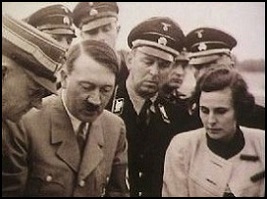
Several years ago, I decided it was high time that I read Adolf Hitler’s manifesto, Mein Kampf.  This is what I wrote in my review of the book:  “You can call him [Hitler] a megalomaniacal monster, but he was nothing if not shrewd and determined.  In Mein Kampf, he exhibits a keen understanding of propaganda, psychology, mass manipulation, class warfare … and the basest human instincts.”  Much of Hitler’s prose, I recall thinking, seemed rather reasonable.  Of course, that was his special talent:  If you want millions to follow you, you can’t come off as a raving lunatic; you have to appeal to people’s sense of injustice in rational terms.

Hitler also knew how to select a good biographer.  Triumph of the Will, Leni Riefenstahl’s infamous documentary featuring the Fuhrer at a 1934 political rally in Nuremberg, captures the mood and fervor of a nation falling under Hitler’s spell.  This movie doesn’t excuse the Nazi movement – but it goes a long way toward explaining it.

Riefenstahl’s challenge as a filmmaker was daunting:  how to take footage of endless crowd scenes (parades, rallies, speeches) – all of it glorifying Hitler and the National Socialist German Workers’ Party – and make it compelling for nearly two hours.  Despite her documentary’s stellar reputation as groundbreaking cinema, I think Riefenstahl was only partly successful.  The camera angles (very high, very low, often dramatic), the editing (juxtaposing Hitler with smiling children – there are lots of smiling children in this film), and other filmic devices are indeed impressive.  But a speech is a speech, and a parade is a parade.  The political rants grow tedious, and the parades become repetitive.

But for the most part, Riefenstahl was as talented behind a camera as Hitler was in front of one.  As the film progresses, the crowds grow larger, Hitler grows more prominent, and the sense that something big is coming is palpable.

Just as in Mein Kampf, the Fuhrer appears calm and reasonable throughout much of the documentary.  Until, that is, the last ten minutes of the film and his final speech.  It is only then, when Hitler begins to rant about race and “best blood,” that his eyes take on a crazed glint, and his voice begins to quake.           Grade:  A-


Will2


Director:  Leni Riefenstahl  Release:  1935


Will4         Will3


                                             Watch the Film  (click here)  


© 2010-2026 grouchyeditor.com (text only)

Share

Wicker1


In 1973, some of the folks at Hammer Films, a British film factory best known for schlocky horror product, decided to get more ambitious.  Christopher Lee, of Frankenstein and Dracula renown, wanted to stretch his acting talents, and so he teamed with screenwriter Anthony Shaffer (Frenzy) and director Robin Hardy to create an original, low-budget chiller they dubbed The Wicker Man.

The result is a true 1970s oddity:  a mystery movie revolving around an epic clash of religions – and a film that feels both dated and timeless.  What’s peculiar is that the “datedness” of The Wicker Man actually works in its favor.  The setting is a Scottish village inhabited by free-loving, guitar-strumming pagans.  With their strange apparel, uninhibited sex lives, and affinity for folksy ballads, these people would seem equally at home in medieval Britain or in Haight-Ashbury during the “summer of love.”

The conflict of the plot is twofold.  Edward Woodward plays a policeman who is staunchly Christian, virginal, and closed-minded.  Sgt. Howie is summoned to an isolated village named Summerisle to investigate the apparent disappearance of a young girl.  Once sequestered on this island, Howie is doubly challenged.  He receives little cooperation from the odd villagers he interrogates, and his very core goes to war with the way these mysterious people choose to live.

The ending of The Wicker Man is justifiably famous, not only for its twist, but also for a truly memorable final shot.  I’d place that image on par with the exalted Statue of Liberty visuals in Planet of the Apes.

A word of warning:  There are multiple versions of The Wicker Man on the market; beware the 88-minute, truncated version, which is choppy and ruinous of the film’s opening scenes.         Grade:  B+


Wicker2


Director:  Robin Hardy  Cast:  Edward Woodward, Christopher Lee, Diane Cilento, Britt Ekland, Ingrid Pitt, Lindsay Kemp, Russell Waters, Aubrey Morris  Release: 1973


Wicker3            Wicker4

Wicker5           Watch Trailer  (click here)


© 2010-2026 grouchyeditor.com (text only)

Share

Bellamy1


The late, great Alfred Hitchcock’s final film was 1976’s Family Plot.  The movie was a tepid, disappointing lark that caused the “Master of Suspense” to go out with a whimper.  Why couldn’t Frenzy have been Hitchcock’s swan song?

I’m no authority on the films of Claude Chabrol, the legendary French director who died earlier this year, leaving Inspector Bellamy as his 50th and last feature, but I’m guessing that Chabrol’s legion of fans are also disappointed.

Bellamy is an alleged “murder mystery” starring portly Gerard Depardieu as a police commissioner on holiday whose seaside reveries are rudely interrupted by two sources:  a nervous stranger who seeks his counsel regarding an apparent murder, and the reappearance of Bellamy’s ne’er-do-well, annoying younger brother, a surly sort who carts old emotional wounds into guest quarters at Bellamy’s previously peaceful household.

Depardieu is a genuine movie star, and it’s just as engaging to watch him eat breakfast with his wife (Marie Bunel, in a strong performance) as it is to see him investigate dark doings.  But Inspector Bellamy is all breakfast and very few dark doings; it’s a character study with characters not much worth studying.

The mystery is uninspired, suspense is nonexistent, and the entire movie is oddly flat.  The greatest tension in the film occurs when Bellamy stops his brother from stealing a scarf at a dinner party.  The whole thing lacks zing.           Grade:  C+


Bellamy2


Director:  Claude Chabrol  Cast:  Gerard Depardieu, Clovis Cornillac, Jacques Gamblin, Marie Bunel, Vahina Giocante, Marie Matheron, Adrienne Pauly, Yves Verhoeven, Bruno Abraham-Kremer, Rodolphe Pauly  Release:  2009


 Bellamy3    Watch Trailers  (click here)


© 2010-2026 grouchyeditor.com (text only)

Share

by Colin Dexter

Service


Of all the fictional modern detectives – Dalgliesh, Wallander, Delaware, Bosch, Spenser, et al. – Dexter’s Inspector Morse remains my favorite.  I suppose it has to do with identification.  Morse’s age, single status, and affinity for beer, crossword puzzles, and attractive women all strike chords with me.  But I also respond to Morse’s fallibility and am amused by his relationship with his long-suffering colleague, hangdog Sgt. Lewis.  Having said all that, Service of All the Dead is not one of Dexter’s better efforts.  

The plot resolution is much too convoluted; Agatha Christie trod similar terrain in Murder on the Orient Express, but Christie’s multiply-motivated murderers were more convincing.  And parts of this book are oddly dated.  Dexter, for example, seemed to think homosexuality is synonymous with pedophilia.  But the author’s strengths are all here:  that wonderful British vocabulary and, above all, Morse himself.


© 2010-2026 grouchyeditor.com (text only)

Share